


I am reading more and more about taxes in the press lately, much of it mistaken. Personally, I am an agnostic when it comes to federal tax rates. Some people believe that we need higher marginal rates to reduce the deficits while others believe that tax cuts pay for themselves through higher economic growth. Either way, "it depends on what we are talking about."
America is unique in how it raises revenue in that we depend on highly progressive income taxes to fund our general expenses. Most developed countries use Value Added Taxes (VAT) to pay for predictably recurring obligations. We prefer (whether we know it or not) to focus on high economic growth and the revenue produced by wealthy people. Below is a chart from the Tax Foundation showing how income fluctuates with the business cycle.
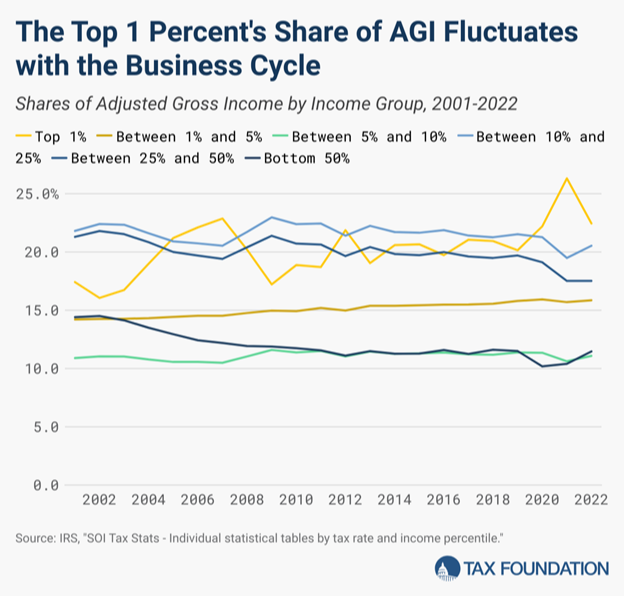
The plus to our system is that we have a uniquely dynamic and creative society when compared to our peers. The downside, as can be seen from the chart, is that government revenue goes down during recessions while government expenditures necessarily rise. The wage earners from whom the government gets a reliable weekly check provide a steadier income stream to the government. The regressive VAT and sales taxes that most European countries rely on are even more predictable income sources for the government, even though they may stifle economic dynamism. Below is a chart of the share of income taxes paid by different income groups.
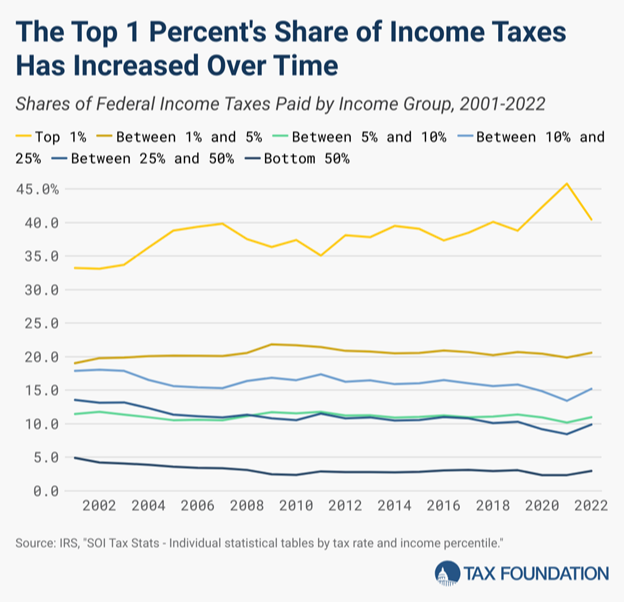
Under our current system, we need rich people to make as much money as possible if we are to avoid higher deficits. Perversely, we built inequality into our system to balance the budget. However, that will not help with our looming Social Security disaster. Higher capital gains taxes and higher income taxes will do nothing to solve the problem since Social Security is funded by payroll taxes. Below is a chart depicting Social Security Income versus benefits paid to persons.
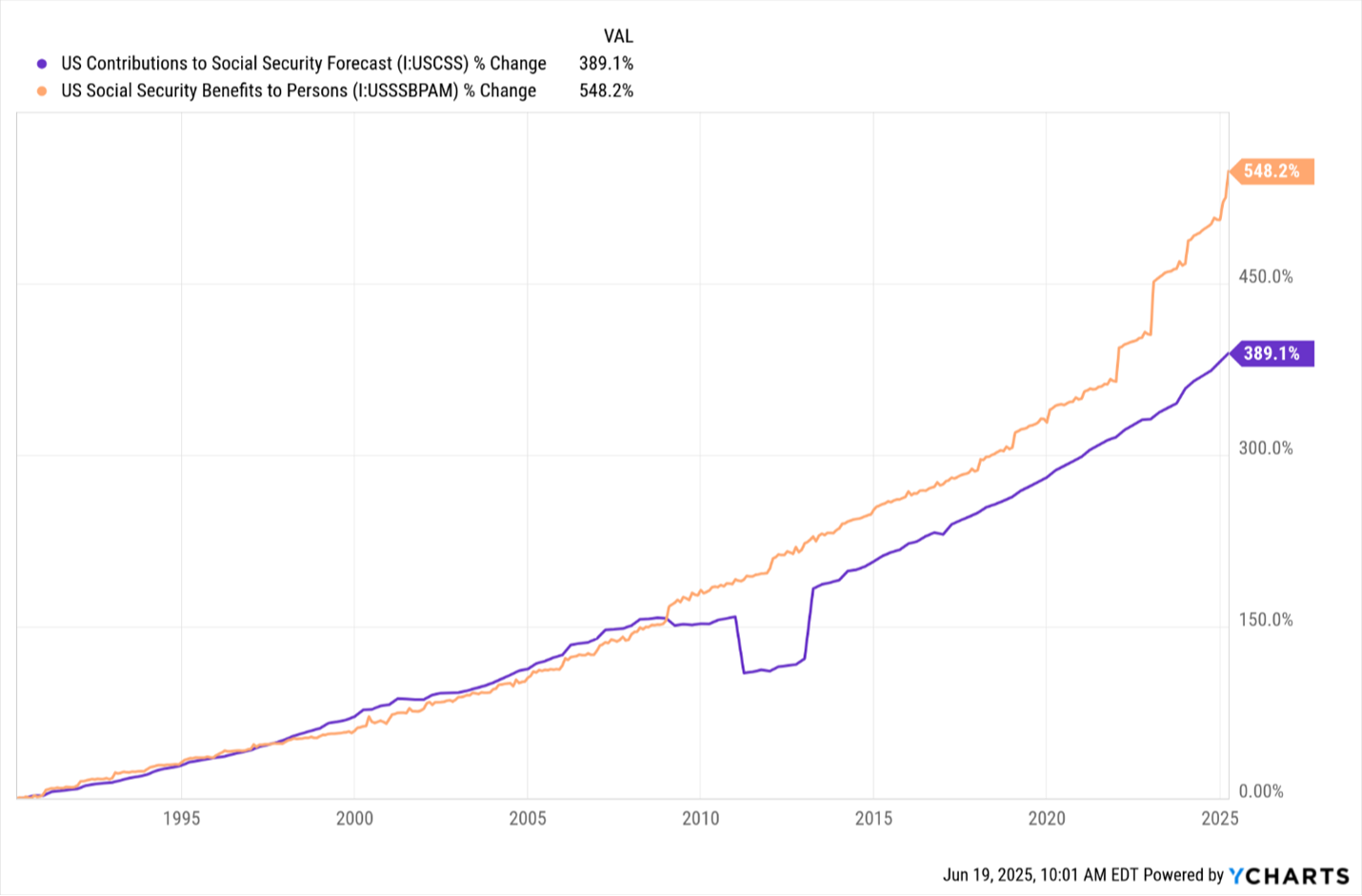
I do not expect significant changes to our income tax rates to come from our elected representatives' debate as to whether the top 39.6% rate we had ten years ago is substantially more magical than the 37% that we have now. I do expect to read many articles about it though. In the meantime, payroll taxes and how much of our income will be subject to them is the giant issue that we are all avoiding. Ultimately, it cannot be avoided, and the solutions will be far worse than they could have been. When that happens, we shall strive to provide the most efficacious financial-planning advice possible. As to what that shall be, I guess that "it depends on what we will be talking about."
* https://taxfoundation.org/data/all/federal/latest-federal-income-tax-data-2025/