


Once again, the news media is breathless over the price of cryptocurrencies (crypto). The last time we saw a preoccupation with highly speculative investments came during the height of the Covid pandemic. Many of the same names are now once again being hyped on cable-television market programs. Extreme caution is the order of the day.
Giant stimulus checks and a population locked in their houses drove the last speculative frenzy. Sports podcasters and the gamers that haunt Reddit gave many reasons why investments with no assets, no earnings, and no material existence had great intrinsic value. Prominent among these theories was that the deficit spending produced by Covid-inspired stimulus would devalue the dollar. Therefore, crypto provided a safe-haven alternative.
Keep in mind that money is a storehouse of value that provides a means of exchange. The ability to sell a good or service for a stable currency that can reliably be exchanged for different goods and services is essential for any successful economy. If you accept this premise, then crypto is not money at all. At least not yet. The chart below illustrates how the Bitcoin Liquid Index fluctuated during the pandemic and since.
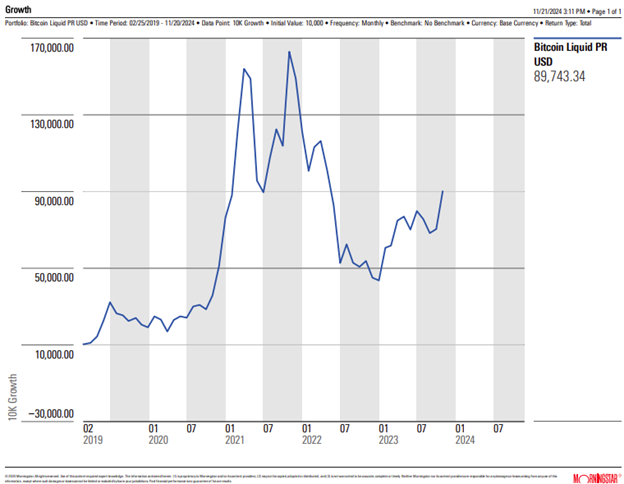
Obviously, crypto does not provide the stability necessary to be used as a reliable means of exchange.
The current mania has similar explanations for why people should exchange their dollars for crypto. The election of Donald Trump is supposed result in giant tax cuts (stimulus) that will make the budget deficit worse and the dollar sink. We are also to expect big tariffs on imported goods that will exacerbate inflation and reduce the purchasing power of the dollar.
Events since the election do not bear this out as the chart below of the Fed’s Nominal Broad Dollar Index shows.
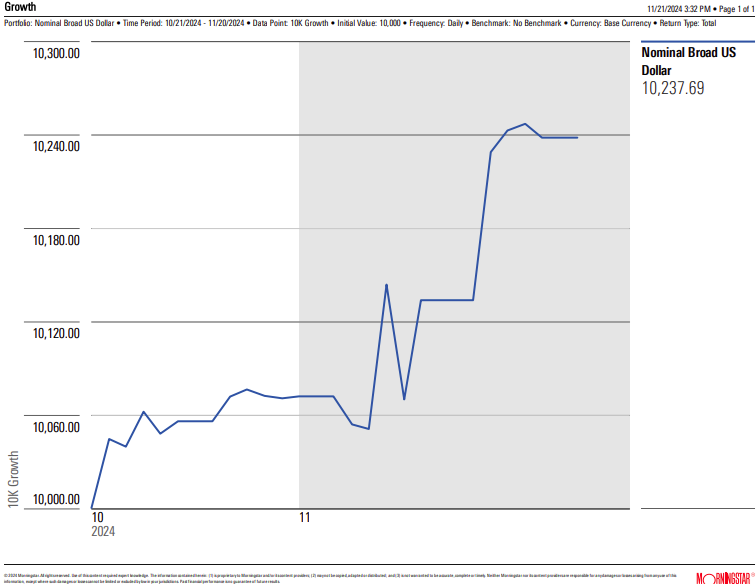
Instead of depreciating since the election, the dollar has appreciated significantly against major currencies since then.
Obviously, there is something else going on here. The Fed’s inability to drive down rates as much as expected is one reason for the strong dollar. Foreigners can buy U.S. bonds and get a higher return along with an appreciating currency. This is not to discount the ongoing problem of deficit spending. Readers of the blog and the newsletter know the depth of my concern about the deficit, federal spending, and the integrity of the dollar. However, those who jump on the crypto bandwagon today are exceedingly likely to get hurt.
*The Bitcoin Liquid Index (BLX) determines a U.S. dollar price point for one Bitcoin at tick intervals of 30 seconds.
**The Federal Reserve’s U.S. Dollar Index measures the performance of the dollar against a basket of currencies. The index is made up of the euro, the Japanese yen, the British pound, Canadian dollar, Swedish krona, and the Swiss franc.